

Ready-to-ship or made-to-order earrings: Which sourcing model fits your business?

When you source earrings, there are three questions you can ask;
- What’s available right now?
- Can this existing design be made to certain specs?
- Can you make something that is entirely yours?
Those three questions point to three different production routes: ready-to-ship stock, ODM white-label production, and OEM custom production.
Now, here’s the mistake many growing jewelry businesses make. They treat those three routes as levels. They think if you start with wholesale stock, you will eventually “graduate” to manufacturing.
Unfortunately, that’s not how it works.
A large distributor might choose ready-made when restocking every single week, while a small boutique may commission a fully custom OEM design on their very first order.
A wholesaler may choose to buy stock products for 90% of its product range, then start producing one proven bestseller because it needs specific quantities or styles that a ready-made stock product cannot give.
The right route depends on what you’ve already decided and what you still need your supplier to solve.
Why ready stock exists in the first place
A manufacturer has to produce earrings in workable batches. This means materials get allocated, production gets scheduled, components are sourced, finishings are arranged, and the whole batch goes through inspection before it is shipped.
You, on the other hand, may not need a batch at all.
As a vendor, you might need 20 different stud designs, several hoop sizes, a handful of dangles, and a few extra pieces of your bestselling designs. That mismatch, batch production on one side and mismatched buying on the other, is why wholesale stock exists.
The manufacturer or wholesaler absorbs the production quantity and holds the finished inventory. You can then buy whatever mix makes sense for your own business.
The production MOQ hasn’t disappeared. Someone else further up on the chain already absorbed it for you.
This reason is also why a stocked wholesale catalog can carry zero minimum per SKU, while asking the same factory to produce that exact design can carry a real MOQ. It is still the same earring, but there are two different starting points.
Who’s who in the supply chain
A manufacturer makes the earrings and controls production. A wholesaler holds stock and lets businesses buy from bigger, upstream quantities in smaller, mixed assortments. The distributor moves the products through specific markets, customer groups, or business networks. And if you sell directly to customers, you’re the one closest to what people actually buy, ignore, return, or ask for twice.
These roles overlap more than the labels may suggest. Phoenix, for example, manufactures jewelry and also runs a wholesale ready-stock business, and plenty of the businesses buying that stock are themselves wholesalers or distributors.
Every link in that chain sees something the others can’t. Distribute to 50 stores, and you understand patterns across a market. Run one specialist shop and you may know your local customers better than any global manufacturer ever could. A manufacturer supplying across several markets sees a different layer entirely – the patterns underneath the patterns.
Why ready stock matters most while you’re still building the assortment
I am sure you know this already but as a reminder if you’re starting a new jewelry business, entering a new market, or supplying a new account, you need to offer a variety of options before you think of narrowing your focus into production control.
Let’s say you have a budget set aside from an earring order, you could commit it to one production batch or just spread it across studs, hoops, huggers, ear cuffs, finishes, sizes, stones, and price points. This uses the stock to test the waters in different areas instead of betting everything on one design.
Stock lets you decide where you want breadth and where you want depth. You can choose more of a familiar bestselling stud, or only a few pieces of an untested hoop. A distributor might already know which of their styles deserve deeper stock because several accounts keep asking. Another business might want the opposite: a wide assortment, shallow on each SKU.
Either way, stock gives you that choice without forcing you into a full manufacturing quantity on every design.

AVAILABILITY: In stock
AVAILABILITY: In stock

AVAILABILITY: In stock
AVAILABILITY: In stock
AVAILABILITY: In stock
AVAILABILITY: In stock
AVAILABILITY: In stock
AVAILABILITY: In stock
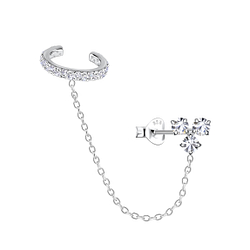
AVAILABILITY: In stock
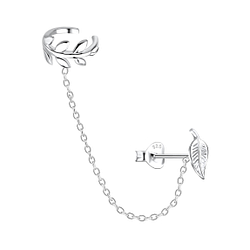
AVAILABILITY: In stock
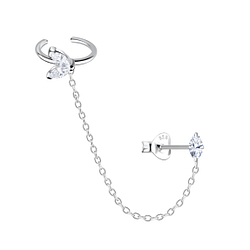
AVAILABILITY: In stock

AVAILABILITY: In stock

AVAILABILITY: In stock

AVAILABILITY: In stock


AVAILABILITY: In stock

$8.98
182 in stock /Need more than what's in stock?
AVAILABILITY: In stock

$9.68
38 in stock /Need more than what's in stock?
AVAILABILITY: In stock

AVAILABILITY: In stock

AVAILABILITY: In stock

AVAILABILITY: In stock

AVAILABILITY: In stock

$8.62
35 in stock /Need more than what's in stock?
AVAILABILITY: In stock

AVAILABILITY: In stock

AVAILABILITY: In stock

$10.02
49 in stock /Need more than what's in stock?
AVAILABILITY: In stock

AVAILABILITY: In stock

$11.86
117 in stock /Need more than what's in stock?
AVAILABILITY: In stock

AVAILABILITY: In stock

AVAILABILITY: In stock

AVAILABILITY: In stock

$7.78
53 in stock /Need more than what's in stock?
AVAILABILITY: In stock

AVAILABILITY: In stock

$5.05
24 in stock /Need more than what's in stock?
AVAILABILITY: In stock

AVAILABILITY: In stock

$9.18
90 in stock /Need more than what's in stock?
AVAILABILITY: In stock

AVAILABILITY: In stock

AVAILABILITY: In stock

AVAILABILITY: In stock

AVAILABILITY: In stock

AVAILABILITY: In stock

AVAILABILITY: In stock

AVAILABILITY: In stock

AVAILABILITY: In stock

$3.58
25 in stock /Need more than what's in stock?
AVAILABILITY: In stock

$4.10
25 in stock /Need more than what's in stock?
AVAILABILITY: In stock

AVAILABILITY: In stock

AVAILABILITY: In stock


AVAILABILITY: In stock

AVAILABILITY: In stock

AVAILABILITY: In stock
What a stocked catalog can tell you
A stocked catalog isn’t just a shelf of products. If you read it right, it’s also a set of signals.
Not guarantees. Signals.
At Phoenix, factors like your sales history, stock movement, customer requests, seasonal timings, and product-development research are what help you choose the products that you produce and what stays in your stock.
Different parts of that catalog tell you different things, if you know what to look for.
New arrivals carry zero sales history and that’s the point. They show you where your supplier is placing its first bet after weighing research, requests, and seasonal timing.
Don’t read them as proven demand.
Read them as a direction to follow. Is a familiar design showing up in a new product line? Can you see new finishes or more price points creeping in?
New arrivals earn their keep by showing you where the market is heading, not where it’s already been.
Best sellers, on the other hand, carry the opposite problem. Real sales data, but data that isn’t necessarily your data. Copying the first bestseller you spot rarely works, because your customers and price positioning aren’t identical to everyone else’s. The smarter move is to look for the pattern across several strong sellers. Look for things like the same hoop size, same stone treatment, same price band, and same closure type.
One bestseller shows you a product. A cluster of them shows you what’s actually been working across an entire customer base.
Recently restocked items have already survived one full stock cycle. The supplier looked at sales, sell-through speed, repeat orders, and demand, and decided to commit that same inventory again. That doesn’t mean it’s a top seller. It means there was enough evidence to bet on it twice.
At Phoenix, if demand is broad enough, a design returns to general stock. If only a handful of accounts need it, it moves into a production order instead, with no need to restock it for everyone.
An unavailable design isn’t automatically dead. A restocked one isn’t automatically a guaranteed hit. It’s evidence, and what you do with that evidence depends on your own market.

AVAILABILITY: In stock

AVAILABILITY: In stock

AVAILABILITY: In stock

AVAILABILITY: In stock

AVAILABILITY: In stock

AVAILABILITY: In stock

AVAILABILITY: In stock

AVAILABILITY: In stock

AVAILABILITY: In stock

AVAILABILITY: In stock

AVAILABILITY: In stock

AVAILABILITY: In stock

AVAILABILITY: In stock

AVAILABILITY: In stock

AVAILABILITY: In stock

AVAILABILITY: In stock

AVAILABILITY: In stock
AVAILABILITY: In stock
AVAILABILITY: In stock

AVAILABILITY: In stock

AVAILABILITY: In stock

AVAILABILITY: In stock

AVAILABILITY: In stock

AVAILABILITY: In stock

AVAILABILITY: In stock

AVAILABILITY: In stock

AVAILABILITY: In stock

AVAILABILITY: In stock

AVAILABILITY: In stock

AVAILABILITY: In stock

AVAILABILITY: In stock

AVAILABILITY: In stock

AVAILABILITY: In stock

AVAILABILITY: In stock

AVAILABILITY: In stock

AVAILABILITY: In stock

AVAILABILITY: In stock

AVAILABILITY: In stock

AVAILABILITY: In stock

AVAILABILITY: In stock

AVAILABILITY: In stock

AVAILABILITY: In stock

AVAILABILITY: In stock

AVAILABILITY: In stock

AVAILABILITY: In stock

AVAILABILITY: In stock

AVAILABILITY: In stock

AVAILABILITY: In stock

AVAILABILITY: In stock

AVAILABILITY: In stock
A simple way to test new or seasonal earrings
Testing stock should answer a question, not chase a random number. There’s no universal rule that says buy five, wait 30 days, reorder at a set sell-through rate.
A useful test asks something sharper:
Is this hoop size gaining interest? Is rhodium quietly outselling yellow-gold in this exact design? Is the design working, or is a lower price doing all the heavy lifting? Are customers asking for the same seasonal theme more than once? Does the same charm perform differently as a stud versus a hoop add-on?
Research → Stock → Learn → Repeat or Improve → Scale.
That’s the way to go.
For seasonal earrings specifically, give yourself enough runway to act on what you learn. Testing at the tail end of a selling window tells you plenty, but leaves you nothing to do with it.
Timing is everything with seasonal stock, and getting it wrong is an expensive way to learn a lesson. Our Sourcing Guide for Seasonal Jewelry walks through how to plan that timing before the season starts, not during it, and our Long-Term Earring Trends guide breaks down which of this year’s “hot” styles are actually built to last.
Made-to-order doesn't mean one thing

Made-to-order earrings split into two very different routes. At Phoenix, those routes are ODM white-label production and OEM custom production. To understand both paths, you need to answer one question:
Are you starting from an earring that already exists in a catalog, or are you building your own design from scratch?
Your answer decides what the manufacturer already knows, and what still has to be worked out from zero.
ODM White Label: Start with the SKU
ODM starts with an existing catalog design. The manufacturer already knows the base product; construction, dimensions, weight, findings, stones, and often its own production history.
That makes for a much shorter conversation. You might simply say:
“I want this stud, but in rhodium.” “I want this CZ drop with a freshwater pearl instead.” “I want this stud design reworked as a hoop charm.” “I need this design in a different size.” “I want more than what’s currently in stock.”
With ODM, you start with the SKU and describe the difference.
This is exactly why a ready-stock catalog and ODM production work so well together. You might discover an earring through stock first, then come back later needing more quantity, a different plating, a different stone. Production simply gives you another route back to a design you already know.
Customization isn't a switchboard
Not every change costs the same in manufacturing hours.
Swapping one plating finish for another is usually straightforward. Swapping a CZ for a freshwater pearl brings in an entirely new component. Turning a stud into a hoop charm changes the construction. Swapping sterling silver for titanium can change the entire manufacturing process.
So when a factory says an ODM design “can be customized,” that doesn’t mean every part is interchangeable on its own. The further you move from the original spec, the more the manufacturer has to recheck construction, tooling, materials, sourcing, and price. Past a certain point, the request may no longer fit the ODM process at all. It becomes its own development project.
OEM: When the product has to be built around your design
OEM flips the conversation.
Instead of “take SKU X and change Y,” you’re saying: “This is the climber I want to create.” The easiest way is to give a technical drawing, a CAD file, sketches, measurements, reference photos, or just ship the sample over.
Now the manufacturer has real questions to answer because the base product may not exist yet in their catalog:
How large should it be? How much metal does it need? What stone size actually works? Where does the post sit? How does the drop connect? What finding suits the weight and the construction? Can it be reproduced consistently, order after order?
OEM means real product development happens before repeat production can even begin.
Walking into that conversation without the right information is how OEM quotes end up delayed by weeks. Our What to Send an Earring Manufacturer for a Quote guide covers exactly which drawings, measurements, and specs to have ready before you reach out.
The operational difference, in one line: ODM starts with a product the factory already understands. OEM starts with a product the factory still has to turn into a spec.
OEM is also where exclusivity enters the Conversation
Phoenix’s ODM model is white-label. The base design comes from our catalog, and stays as part of that catalog. OEM works differently. Phoenix OEM designs are exclusive to the customer, and NDAs apply unless the customer waives exclusivity. Waive it, and Phoenix may, at its own discretion, waive the mold fee too; this is decided case by case.
If exclusivity matters to your business, nail down exactly what the agreement covers before development starts: design, CAD files, molds, future production rights, and confidentiality, all of it.
Why production MOQs actually exist
“Factories need bigger quantities to lower costs.”
True. Also incomplete.
Say you request the same earring in rhodium, yellow-gold, and rose-gold plating, across two sizes, with two different stones. To you, it’s still one design. Inside the factory, those variations fragment into separate material requirements, plating batches, components, QC references, and schedules.
Every variation splits the production run a little further.
Then there’s everything happening further upstream. The factory might need a stone from another supplier entirely. A custom-cut stone can carry its own minimum. A specialist chain might come from a different manufacturer altogether. An unusual construction might need dedicated chain-making equipment that simply isn’t lying around.
Sometimes the MOQ you’re hitting isn’t the factory’s. It’s set two suppliers further up the chain and passed down to you.
MOQ isn’t there to pad margins. It’s there to keep the entire production job workable.
Why production quotes can change
A production quote isn’t really “how much to make this earring.” It’s the factory pricing exactly what you’re asking it to make right now, in this metal market, with this stone availability.
At Phoenix, quotes are built on current metal prices. Quote the same earring twice, weeks apart, and a moved metal market can hand you two different numbers.
Raw-material availability matters just as much. Request a natural stone, and the factory has to confirm enough well-matched stones exist for the pair. Request a specialist chain, and the factory may need to source it externally, meet a supplier’s own MOQ, or confirm its equipment can even produce that construction.
The quote inherits the realities of the supply chain sitting behind it.
A higher price isn’t automatically a bigger margin — it might be a moved metal market, a scarcer stone, or a minimum set three suppliers away from you.
When stock and production sit under one roof
When your supplier both manufactures and wholesales, stock and production stop being two separate paths. They become one connected route.
You start with available stock, watch what’s new, see what’s been reordered, build your own sales history, and feed feedback back upstream. When your needs get specific, you simply ask whether the design is returning to stock, moving through ODM, or needs real development.
Plenty of our own customers are distributors and wholesalers in their own right. Their market knowledge and customer relationships don’t disappear just because manufacturing sits closer to them. What changes is the speed and clarity with which their feedback reaches production.
Ask what's actually behind the earrings
If your wholesaler also manufactures, ask what it can actually show you. “High standards” is easy to type onto a product page. Documentation is the part that’s harder to fake.
At Phoenix, that includes Responsible Jewelry Council certification, a 4-pillar Sedex SMETA assessment, amfori BSCI, and an SLCP assessment verified by Intertek Thailand, along with product testing specific to what we manufacture. That paperwork matters most when you have to answer for sourcing to your own customers or accounts.
Not every supplier claiming “quality” can back it up with paper. Our How to Identify Quality Jewelry & Choose the Right Wholesale Manufacturer guide breaks down exactly what to ask for before you commit to one.
The real choice behind ready-to-ship and made-to-order earrings was never about which model is “better.” It’s about deciding where you want the supplier to take over, and where you’re ready to take control yourself.
Which sourcing model fits your business?
It comes down to what you already know.
Still building the assortment, still deciding which designs, sizes, or finishes deserve more depth?
Ready stock gives you something concrete to work with, without committing to a production quantity on every SKU.
Browse our Wholesale Stud Earring Catalog, kids hoop earrings, or Wholesale Hoop Earring Catalog to compare specs and see what actually fits your customers.
Already know the design, but need more quantity or a different plating, stone, size, or construction? ODM white-label production is your route.
Start with the closest match in our Production Catalog and tell us exactly what needs to change.
Need something that doesn’t exist yet or a design that’s entirely yours? OEM is how that gets built.
Most businesses end up using all three at once: stock covering one part of the assortment, ODM adjusting an existing design, OEM building something new entirely.
Start with the earrings you actually need. See what already exists. Then decide what still needs to be produced, or developed, from there.
That’s the real difference between ready-to-ship and made-to-order sourcing.

$3.22
219 in stock /Need more than what's in stock?
AVAILABILITY: In stock

AVAILABILITY: In stock

AVAILABILITY: In stock

AVAILABILITY: In stock

AVAILABILITY: In stock

AVAILABILITY: In stock

AVAILABILITY: In stock

AVAILABILITY: In stock

AVAILABILITY: In stock

AVAILABILITY: In stock

AVAILABILITY: In stock

AVAILABILITY: In stock

AVAILABILITY: In stock

$5.83
90 in stock /Need more than what's in stock?
AVAILABILITY: In stock

AVAILABILITY: In stock

AVAILABILITY: In stock

AVAILABILITY: In stock

AVAILABILITY: In stock

AVAILABILITY: In stock

AVAILABILITY: In stock

AVAILABILITY: In stock


AVAILABILITY: In stock

AVAILABILITY: In stock

AVAILABILITY: In stock

AVAILABILITY: In stock

AVAILABILITY: In stock

AVAILABILITY: In stock

AVAILABILITY: In stock

AVAILABILITY: In stock

AVAILABILITY: In stock

AVAILABILITY: In stock

AVAILABILITY: In stock

AVAILABILITY: In stock

$2.91
188 in stock /Need more than what's in stock?
AVAILABILITY: In stock


AVAILABILITY: In stock


AVAILABILITY: In stock

AVAILABILITY: In stock

AVAILABILITY: In stock

AVAILABILITY: In stock

AVAILABILITY: In stock


AVAILABILITY: In stock

AVAILABILITY: In stock

AVAILABILITY: In stock

AVAILABILITY: In stock

AVAILABILITY: In stock

AVAILABILITY: In stock

AVAILABILITY: In stock

AVAILABILITY: In stock

AVAILABILITY: In stock

AVAILABILITY: In stock